
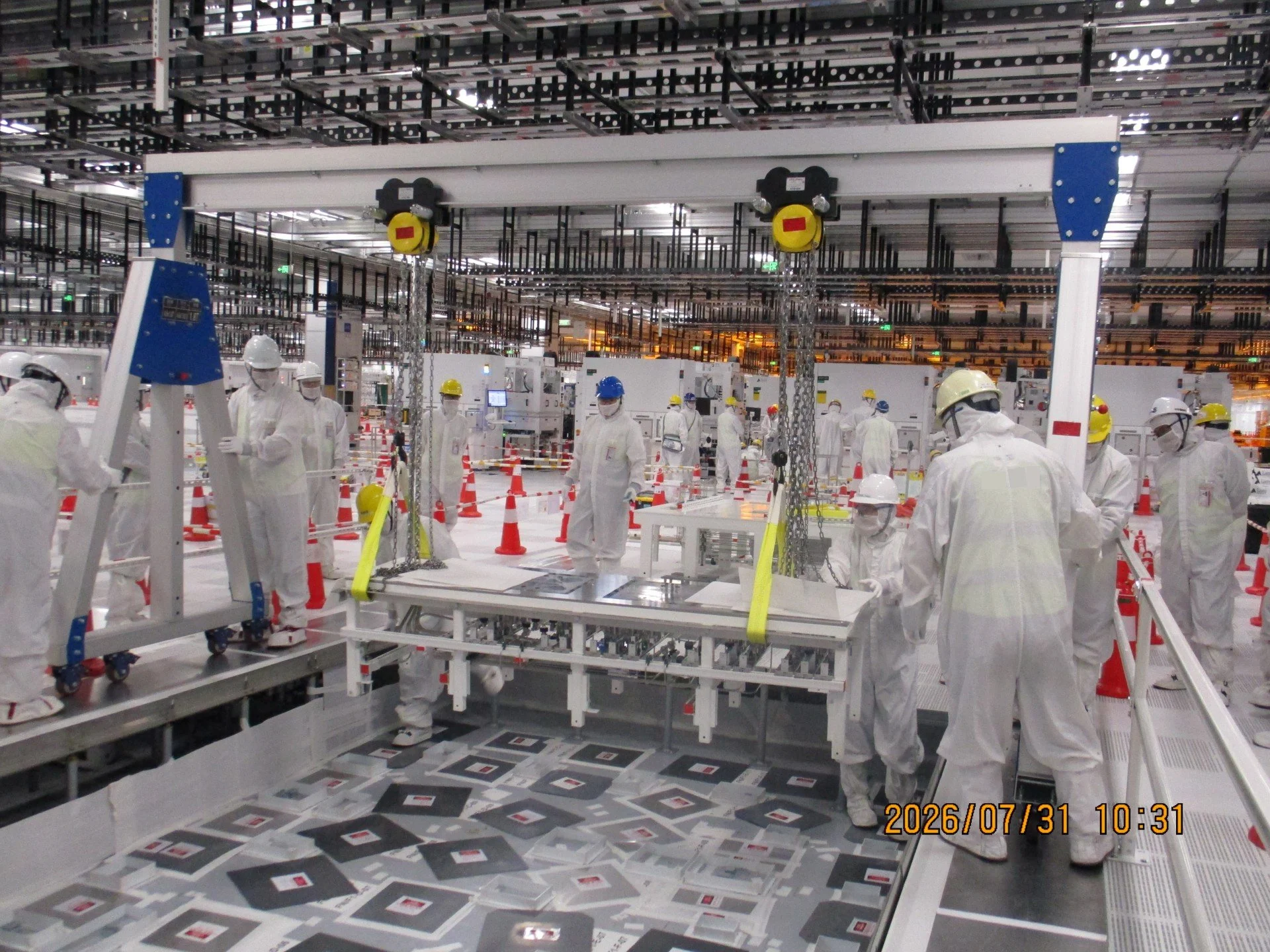
Semiconductor equipment installation involves more than positioning equipment and connecting it to the required systems. The supporting structure beneath the equipment can directly affect installation accuracy, structural stability, vibration performance, and long-term operation.
For this reason, equipment support should be considered early in the project—not as an afterthought during installation.
Here are several key factors to consider when planning semiconductor equipment installation.
01 — EQUIPMENT REQUIREMENTS
Every equipment installation begins with understanding the equipment itself.
Equipment dimensions, weight, load distribution, mounting points, center of gravity, and installation tolerances can all influence the design of the supporting system.
Understanding these requirements early helps establish the appropriate pedestal configuration, structural capacity, and interface between the equipment and its support system.
02 — STRUCTURAL STIFFNESS
A support system must provide sufficient rigidity under the expected equipment loads.
Insufficient stiffness can result in excessive displacement or structural movement, which may affect equipment stability and installation accuracy.
Structural analysis and stiffness evaluation can help identify potential issues before fabrication and installation.
03 — VIBRATION PERFORMANCE
Vibration can be a critical consideration for precision and vibration-sensitive equipment.
Sources may include surrounding equipment, building activity, mechanical systems, or other environmental conditions. The support system can influence how vibration is transmitted to the equipment.
Understanding the applicable vibration criteria and establishing appropriate measurement and evaluation methods early in the project can help ensure the support system meets the required performance conditions.
04 — SITE CONDITIONS
The support system must work within the actual installation environment.
Floor conditions, available space, elevations, existing structures, access limitations, and site-specific requirements can all affect the design and installation process.
Reviewing site conditions early allows the engineering and fabrication approach to be adjusted before these constraints become installation issues.
05 — ENGINEERING & FABRICATION COORDINATION
Equipment support systems often require close coordination between engineering and fabrication.
Engineering models, fabrication drawings, assembly details, and BOMs should reflect the actual project requirements and installation conditions.
Connecting engineering and fabrication through a coordinated process can reduce miscommunication and help ensure that the fabricated system is ready for installation as intended.
06 — TESTING & VALIDATION
Testing provides an opportunity to verify performance before or during deployment.
Depending on project requirements, testing may include stiffness testing, vibration measurement, or other structural and performance evaluations.
Using analysis and testing together can provide greater visibility into system performance and help identify potential issues before they affect equipment installation.
FROM REQUIREMENTS TO INSTALLATION
A successful equipment installation begins well before equipment arrives on site.
By considering equipment requirements, structural performance, vibration, site conditions, engineering coordination, and validation early in the process, project teams can develop support solutions that are better aligned with installation and performance requirements.
At PURVION, we connect engineering, fabrication, testing, and installation support through one coordinated process—developing equipment support solutions around the specific requirements of each project.